
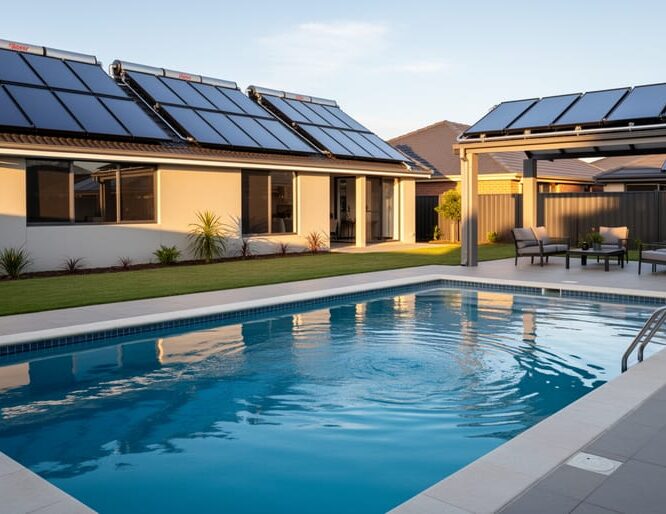
A solar pool heating system uses energy from the sun to warm swimming pool water, circulating it through solar collectors that absorb heat before returning it to the pool at a comfortable temperature. These systems represent one of the most cost-effective and environmentally responsible ways to extend your swimming season, often reducing pool heating costs by 50 to 85 percent compared to gas or electric heaters while producing zero emissions.
For homeowners weighing the investment in 2026, the appeal goes beyond sustainability. Solar pool heaters typically pay for themselves within three to seven years through energy savings, and with proper EJ Solar Pools service they can last 15 to 20 years or more. Installation is surprisingly straightforward, particularly for homes in sunny climates where these systems thrive.
This guide breaks down exactly how solar pool heating works, the components that make up a complete system, and the different configurations available for various pool types and climates. Whether you’re a DIY enthusiast evaluating a weekend project or a professional installer advising clients, you’ll find the technical details and practical considerations you need to make an informed decision about solar pool heating.
What Is a Solar Pool Heating System?
A solar pool heating system is a renewable energy technology that harnesses the sun’s thermal energy to raise and maintain your pool’s water temperature. Unlike conventional gas or electric heaters that burn fuel or consume grid power, these systems use solar collectors, typically mounted on a roof, fence, or ground rack, to absorb heat from sunlight and transfer it directly to circulating pool water. The result is a cost-effective, environmentally responsible way to extend your swimming season without the ongoing energy bills associated with traditional heating methods.
At its core, the system works by pumping pool water through a series of solar collectors where it warms before returning to the pool. When the sun shines, your pool heats up; when clouds roll in or night falls, the heating pauses but your pool retains much of that accumulated warmth. This passive approach to climate control means no combustion, no emissions, and virtually no operating cost once installed.
- Solar Collectors
- Panels or tubes that absorb sunlight and transfer the captured heat to pool water flowing through them. They can be glazed (enclosed in glass for colder climates) or unglazed (open polymer construction for warmer regions).
- Circulation System
- The pump, filter, and plumbing network that moves pool water through the solar collectors and back to the pool, often controlled by a temperature sensor and automatic valve.
- Thermal Energy
- The heat energy from the sun that solar collectors convert into warmer water, raising pool temperature without burning fuel or using electricity for heat generation.
- Passive vs. Active Heating
- Passive systems rely solely on the sun and natural convection; active systems use pumps and controllers to optimize water flow and temperature management for consistent results.
The environmental appeal is straightforward: solar pool heating eliminates the carbon footprint of gas heaters and slashes the electricity demand of heat pumps. For eco-conscious homeowners, that translates to guilt-free pool enjoyment and a smaller household environmental impact. The financial benefits are equally compelling. After the initial equipment and installation investment, solar heating costs essentially nothing to run, no monthly gas bills, no surging electric rates. Most systems pay for themselves within three to seven years through energy savings, then continue delivering free heat for two decades or more with minimal upkeep.
How Solar Pool Heating Systems Work
The Role of Solar Collectors
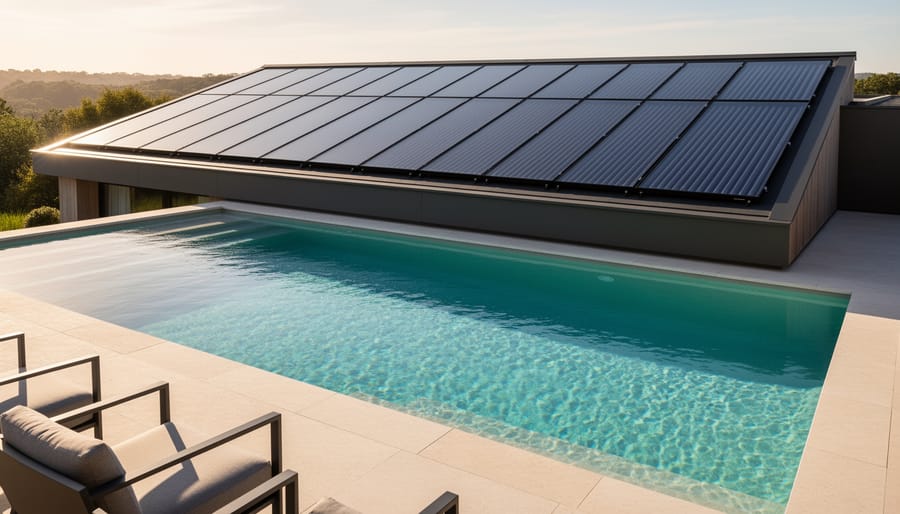
Solar collectors are the heart of any solar pool heating system, functioning as the primary heat-exchange component that warms your pool water. These panels contain a network of small tubes or channels through which pool water flows. As sunlight strikes the collector surface, the material absorbs solar radiation and converts it into thermal energy, which transfers directly to the water passing through.
Most residential solar collectors are constructed from durable polymers like polypropylene or EPDM rubber, chosen for their excellent heat conductivity and resistance to pool chemicals and UV degradation. These materials maximize heat absorption while maintaining flexibility for installation on various surfaces.
Placement determines collector efficiency significantly. South-facing installations receive optimal sun exposure in the Northern Hemisphere, while the collector angle should ideally match your latitude for year-round heating or be steeper for winter performance. Even a 15-degree deviation from optimal positioning can reduce efficiency by 10-15%.
Shade is the enemy of performance. Installers assess roof or ground locations to ensure collectors receive direct sunlight during peak heating hours, typically 10 AM to 4 PM. Strategic placement away from trees, chimneys, or neighboring structures maximizes the solar energy captured throughout the swimming season.
Circulation and Control Systems
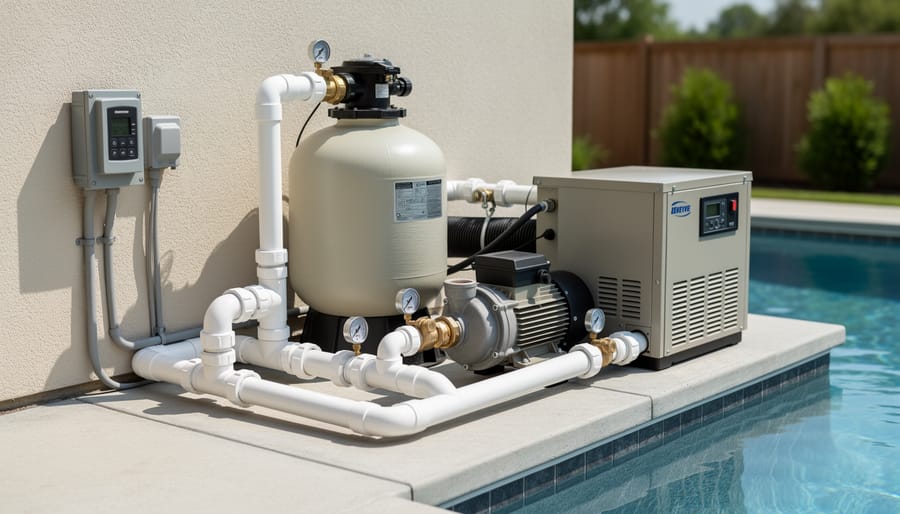
Your pool’s circulation and control systems form the nerve center of solar heating efficiency. The existing pool pump pulls water through the filter, then diverts it through the solar collectors when conditions are right, before returning the warmed water to the pool. This continuous flow ensures consistent temperature gain throughout the day.
Modern automated controllers act as the system’s brain. They compare the collector temperature to the pool water temperature using sensors, activating a diverter valve only when the collectors are warmer than the pool. This prevents heat loss on cloudy days or during cool evenings when collectors would actually cool the water. The controller also monitors flow rates to ensure optimal contact time between water and collector surfaces.
The beauty lies in automation. Once programmed with your target temperature, the system runs independently, opening and closing valves without manual intervention. Your pool pump does the heavy lifting it already does for filtration, meaning no additional energy costs for circulation. This intelligent coordination between existing equipment and solar components maximizes heat capture while minimizing waste, keeping your pool comfortably warm with minimal effort on your part.
Types of Solar Pool Heating Systems and Components
Glazed vs. Unglazed Solar Collectors
Choosing between glazed and unglazed solar collectors depends largely on your climate and how you use your pool throughout the year.
Unglazed collectors are the simpler, more affordable option. Made from durable rubber or heavy-duty plastic (typically polypropylene), these open panels have no protective covering. Water flows directly through the collector tubes, which absorb heat from the sun. They’re lightweight, easy to install, and perfect for seasonal pool use in warm climates where freezing isn’t a concern. Most residential pool owners in temperate regions choose unglazed systems because they deliver excellent performance from late spring through early fall at a fraction of the cost of glazed alternatives.
Glazed collectors feature copper or aluminum absorber plates enclosed in an insulated box with a tempered glass cover. This greenhouse-style design traps heat more effectively, making glazed systems significantly more efficient in cooler weather or year-round pool heating scenarios. The glass cover reduces heat loss from wind and cold air, allowing these collectors to maintain performance even when outdoor temperatures drop. They’re the go-to choice for colder climates, indoor pools, or anyone wanting to swim comfortably in winter months.
The trade-off is straightforward: unglazed collectors cost less and work beautifully for seasonal heating, while glazed collectors cost considerably more but extend your swimming season well beyond what unglazed systems can achieve in challenging weather.
Essential System Components
A complete solar pool heating system requires several key components working in concert. Beyond the collectors themselves, you need supporting hardware to move water efficiently and keep the system running safely.
The core components include:
- Solar collectors that capture and transfer heat to the pool water
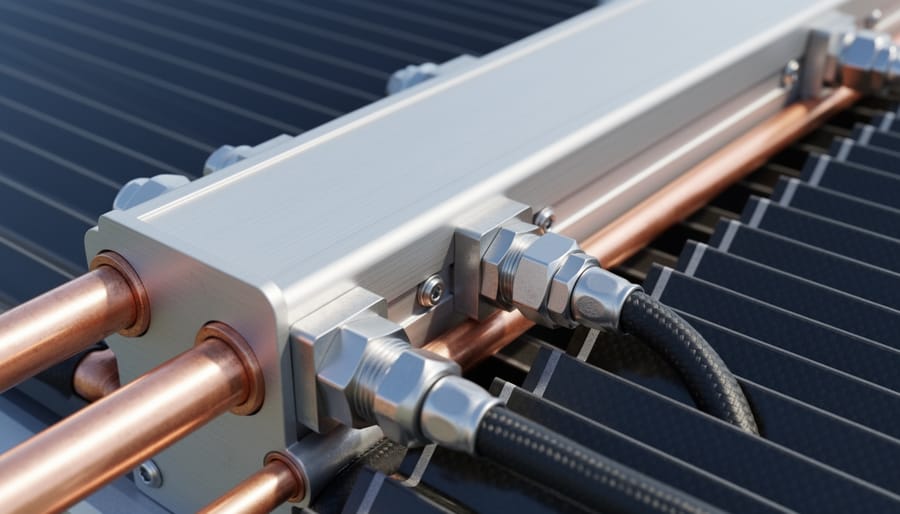
- Manifolds that distribute water evenly across multiple collector panels
- Circulation pump (often your existing pool pump) to move water through the system
- Flow control valve that diverts water to collectors when heating is needed
- Pressure gauge to monitor system performance and detect blockages
- Mounting brackets and hardware to secure collectors to roof or ground structures
- Optional automation controller that manages heating cycles based on temperature sensors
Manifolds and headers deserve special attention because they determine how evenly water flows through your collector array. The manifold splits incoming water across multiple panels, while headers at the top collect the heated water before returning it to the pool. Proper sizing prevents flow restrictions that reduce heating efficiency.
Pressure monitoring catches problems early. A sudden pressure drop signals a leak, while rising pressure indicates debris buildup or a closed valve. Most installers add a simple gauge between the pump and collectors for quick visual checks during routine maintenance.
Control valves manage the heating cycle automatically. When pool temperature drops below your setpoint and collectors are warmer than the water, the valve opens to route water through the solar array. Manual three-way valves work for budget installations, but automated valves paired with temperature sensors eliminate guesswork and maximize efficiency.
Common Uses and Applications
Solar pool heating systems serve a wide range of applications, making them versatile solutions for pool owners across different settings and climates. Understanding where these systems excel helps homeowners and professionals identify the best opportunities for solar heating installations.
Residential Pool Applications
The most common application is residential in-ground pools, where solar collectors can be mounted on rooftops or ground racks to provide consistent heating throughout the swimming season. Homeowners with above-ground pools also benefit from solar heating, typically using smaller collector arrays proportional to their pool’s surface area. Many pool owners extend this technology to spas and hot tubs, where the higher desired temperatures make solar heating particularly cost-effective compared to electric or gas alternatives.
Climate and Seasonal Considerations
Solar pool heating excels at extending the swimming season in moderate climates, often adding two to three months of comfortable pool use in spring and fall. In warmer regions like Florida, Arizona, and Southern California, these systems enable year-round swimming by maintaining pleasant water temperatures even during cooler winter months. Even in northern climates with shorter summers, solar heating makes pools usable earlier in spring and later into autumn, maximizing the return on pool ownership.
Commercial and Professional Applications
Commercial facilities including hotels, resorts, fitness centers, and community pools increasingly adopt solar heating to reduce operational costs while demonstrating environmental responsibility. These larger installations often combine solar systems with backup heating for guaranteed temperature control, though proper solar heating maintenance ensures reliable performance across all applications.
Common solar pool heating applications include:
- Residential in-ground pools of all sizes and shapes
- Above-ground pools with proportionally sized collector arrays
- Spa and hot tub heating for enhanced comfort
- Extending the swimming season by two to three months
- Year-round pool heating in warm climates
- Commercial pool facilities seeking reduced energy costs
The adaptability of solar pool heating systems across these diverse applications demonstrates their practical value for anyone seeking sustainable, economical pool temperature control.
Benefits of Solar Pool Heating
Solar pool heating systems deliver compelling advantages that extend well beyond simply warming your water. The most immediate benefit is drastically reduced energy costs, homeowners typically save 50-85% compared to traditional gas or electric heaters, since sunlight is free once your system is installed. This translates to hundreds or even thousands of dollars in annual savings, with most systems achieving solar heater payback within three to seven years depending on local energy rates and pool usage patterns. Your solar pool investment continues delivering value for decades after that initial payback period.
From an environmental perspective, solar heating produces zero greenhouse gas emissions during operation and eliminates the need for fossil fuel combustion. You’re extending your swimming season using clean, renewable energy rather than burning natural gas or drawing electricity from the grid. Maintenance demands are refreshingly minimal, no pilot lights to monitor, no combustion chambers to clean, and no complex mechanical parts prone to failure. A simple rinse of the collectors once or twice per season and periodic checks of your pump and valve system are typically all that’s required.
Perhaps the most tangible benefit is the extended pool season. Solar heating can add two to four months of comfortable swimming to your calendar in most climates, turning your pool from a summer-only amenity into a nearly year-round recreation space. The system operates silently, without the noise and vibration of gas heaters, and integrates seamlessly with your existing pool equipment.
Installation Considerations
Before installing a solar pool heating system, several practical factors determine whether your setup will deliver optimal performance and reliable warmth for years to come.
Mounting Location and Orientation
Roof mounting typically offers the best sun exposure and saves yard space, but it requires secure attachment points and proper structural support. Ground-mounted systems provide easier access for maintenance yet demand adequate open space with minimal shading. Regardless of placement, collectors should face true south in the northern hemisphere (north in the southern hemisphere) and tilt at an angle roughly equal to your latitude for maximum solar gain. Even a west or east-facing orientation can work, though you’ll sacrifice some efficiency.
Match your collector area to your pool’s surface area and climate. A common guideline calls for collector coverage equal to 50-100% of the pool surface, cooler climates and year-round heating push you toward the higher end, while warmer regions with seasonal use need less. Undersized collectors won’t heat effectively; oversized arrays waste money without proportional benefit.
Sun Exposure and Shading
Survey your site for trees, chimneys, or structures that cast shadows during peak sun hours (roughly 9 a.m. to 3 p.m.). Even partial shading cuts heat output significantly. Trim overhanging branches or choose an unobstructed location to ensure collectors receive full sunlight throughout the day.
Existing Equipment Compatibility
Verify that your current pool pump has sufficient flow rate and pressure to push water through the solar collectors. Most systems integrate seamlessly with standard filtration setups, but older or undersized pumps may struggle. Check valve and plumbing connections to confirm compatibility before purchasing components.
DIY Installation Feasibility
Many unglazed systems arrive with straightforward instructions, mounting hardware, and minimal plumbing adjustments, making them accessible for confident DIYers. Roof installations demand safety precautions and leak-proof flashing, so consider professional help if you lack roofing experience. Proper installation from the start will keep it running strong season after season without costly repairs.
Frequently Asked Questions
How long do solar pool heating systems last?
Quality solar collectors typically last 15 to 20 years with proper installation and minimal maintenance. The system’s longevity depends on factors like material quality, UV exposure, and local weather conditions, but most manufacturers offer warranties ranging from 10 to 12 years.
Do solar pool heaters work in cloudy or cooler climates?
Yes, though performance varies with sun exposure. Solar collectors generate heat even on overcast days, just less efficiently than in direct sunlight. In cooler climates, you may need a larger collector array to achieve desired temperatures, and the swimming season will be shorter than in consistently sunny regions.
What maintenance do solar pool heating systems require?
Maintenance is minimal compared to gas or electric heaters. You’ll need to check panels periodically for debris, ensure proper water flow through collectors, and inspect connections for leaks. An annual inspection focusing on service quality assurance helps identify potential issues before they become problems.
Can I install a solar pool heating system myself?
Many homeowners with basic plumbing skills and DIY experience successfully install solar pool heaters, especially unglazed systems designed for residential use. You’ll need to mount collectors, connect them to your existing pool circulation system, and integrate control valves. However, if roof mounting is required or local codes demand professional installation, hiring an experienced installer ensures optimal performance and warranty protection.
Beyond these common concerns, potential buyers often wonder about cost savings. While exact savings depend on your current heating method, pool size, and local climate, solar systems typically reduce or eliminate traditional heating costs once installed. The initial investment pays itself back over several years through energy savings, making solar heating an economically sound choice for pool owners planning to stay in their homes long-term. Compatibility with existing equipment is rarely an issue since solar systems integrate into standard pool circulation setups, though you may need to upgrade your pump if it lacks sufficient power to push water through the collectors.
how it works
A solar pool heating system operates through a continuous cycle that harnesses the sun’s energy to warm your pool water. Your existing pool pump circulates water from the pool through a series of solar collectors mounted on your roof, rack, or ground installation. As water flows through these collectors, typically made of dark polymer materials, it absorbs solar radiation and increases in temperature by 5 to 15 degrees Fahrenheit during each pass.
The heated water then returns to the pool through your existing return lines, gradually raising the overall pool temperature throughout the day. An automatic control system monitors both the collector temperature and pool water temperature, activating the flow diverter valve only when heating conditions are favorable. When collectors are cooler than the pool water (such as at night or during cloudy periods), the valve automatically bypasses the collectors, preventing heat loss.
This passive heating process requires no additional fuel or electricity beyond your standard pool pump operation. The system works most efficiently during peak sunlight hours, though collectors continue absorbing ambient heat even on overcast days. Most installations achieve optimal pool temperatures within three to five sunny days.
Solar pool heating systems represent a smart investment for anyone looking to maximize their pool season while reducing energy costs and environmental impact. By harnessing free, renewable solar energy, these systems deliver reliable heating performance year after year with minimal maintenance requirements. Whether you’re an eco-conscious homeowner seeking sustainable solutions or a professional installer expanding your service offerings, solar heating technology has matured into an accessible, proven option that pays dividends through extended swim time and lower operating expenses.
The beauty of modern solar pool heating lies in its simplicity. Systems are designed for straightforward installation, making them ideal for DIY enthusiasts who want hands-on control of their pool upgrades. Professional installers benefit from lightweight components, flexible mounting options, and streamlined setup processes that keep labor costs down while delivering outstanding customer satisfaction.
EJ Solar Pools offers a comprehensive range of solar heating components tailored to various pool sizes, climates, and installation scenarios. From unglazed collectors perfect for warm regions to complete system packages with all necessary hardware, you’ll find solutions engineered for performance and longevity. Take the next step toward sustainable pool ownership and discover how solar heating can transform your swimming experience.