
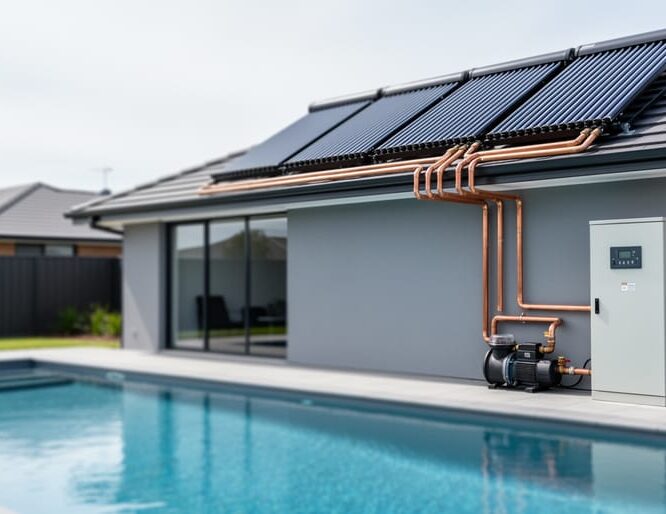
Solar pool heating systems must comply with specific National Electrical Code (NEC) requirements, but here’s the good news: most solar pool collectors are low-voltage systems that fall outside the scope of traditional electrical code provisions. The key distinction lies in understanding whether your system includes electric pumps, controllers, or automated valves that do require NEC compliance, typically under Article 690 for solar photovoltaic systems or Article 680 for pool electrical equipment.
If you’re installing a solar thermal pool heating system (the most common type for residential pools), you’re primarily dealing with plumbing connections and roof-mounted collectors that circulate pool water using your existing pump. These systems don’t generate electricity, which means they sidestep most electrical code requirements altogether. Understanding how solar pool systems work clarifies why this distinction matters for your installation.
The confusion often arises because solar pool heating gets lumped together with solar electric (photovoltaic) systems in online searches. They’re fundamentally different technologies with different code requirements. A solar pool heater uses the sun’s thermal energy to warm water directly through black collectors on your roof. No electricity is generated or consumed beyond your standard pool pump.
That said, if your system includes electric controllers, automated diverter valves, or supplementary circulation pumps, those components absolutely require proper electrical installation following NEC guidelines. Safety remains paramount, particularly when combining water and electricity near pool areas. This guide breaks down exactly which code sections apply to your specific setup, what safety measures you can’t skip, and when you should call a licensed professional instead of tackling the installation yourself.
What the NEC Solar Code Covers for Pool Heating Systems
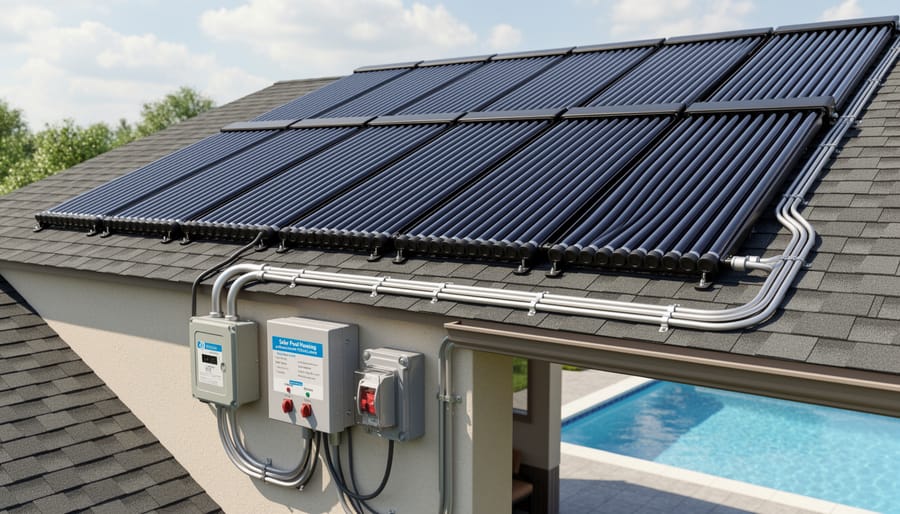
The National Electrical Code addresses solar installations through several articles, but the scope depends on whether your pool heating system includes electrical components. Most solar pool collectors operate as simple thermal systems, water circulates through panels to absorb heat, and don’t generate electricity. These thermal-only installations typically fall outside the NEC 690 solar PV scope which specifically governs photovoltaic power systems that convert sunlight into electricity.
However, the electrical equipment that supports your solar pool system must meet code requirements. Article 680 covers all electrical installations near swimming pools and spas, establishing safety rules for pumps, control panels, bonding, and grounding. If your setup includes a circulation pump, automatic valve controls, or temperature sensors, these components fall under Article 680’s jurisdiction regardless of whether the collectors themselves are thermal or photovoltaic.
Some modern solar pool systems incorporate small photovoltaic panels to power pumps or controllers. When electricity generation is involved, Article 690 comes into play alongside Article 680. The code requires proper inverters, disconnects, grounding, and labeling for any PV components, even low-voltage systems.
The distinction matters because it determines which inspections you’ll need, which materials are acceptable, and whether you can tackle installation yourself. Pure thermal systems have fewer code hurdles, while hybrid systems with electrical generation face stricter requirements.
Core NEC Requirements for Solar Collector Installations
Electrical Bonding and Grounding Standards
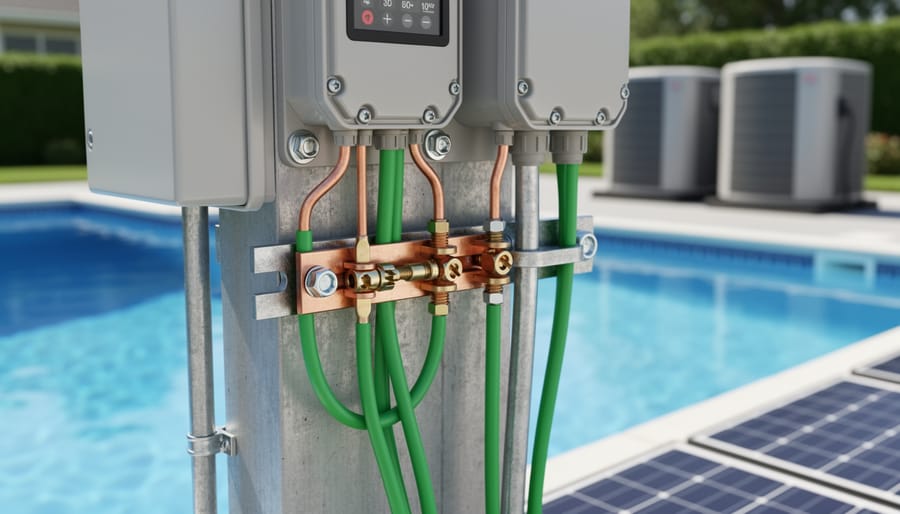
Proper bonding and grounding form the backbone of electrical safety for solar pool heating systems. The NEC mandates that all metal components, including solar collector frames, mounting hardware, pump housings, and control boxes, be electrically connected to your pool’s existing bonding grid. This creates a continuous low-resistance path that equalizes potential differences and prevents dangerous voltage buildup.
Solar collectors mounted on roofs or ground racks must bond to the equipment grounding conductor, typically using copper wire sized according to NEC Article 250. For most residential installations, a 6 AWG copper wire provides adequate grounding from the collector array to your main service panel. The PV bonding and grounding requirements specify that grounding electrode conductors be protected from physical damage and installed in conduit where exposed.
Pool pump motors and control systems require both an equipment grounding conductor and connection to the pool’s bonding system, a common eight-foot perimeter bonding loop. All bonding connections must use listed connectors or exothermic welding, never simple wire nuts or electrical tape. Stainless steel hardware in contact with copper can corrode over time, so use bonding lugs rated for dissimilar metals or apply anti-corrosion compounds at all connections.
Ground fault protection becomes critical where electrical components sit near water. Even systems operating on low-voltage solar thermal principles need proper grounding to protect against incidental contact with pool electrical systems or lightning strikes.
Wiring and Conduit Specifications
Solar pool collectors operate in demanding outdoor environments where wiring must withstand intense UV exposure, temperature swings, and corrosive pool chemicals. The NEC addresses these challenges through specific material and installation standards.
Wire sizing follows ampacity calculations based on your pump’s current draw and circuit length. Most residential solar pool systems use 12 AWG copper wire for standard 15-amp circuits, but runs exceeding 100 feet may require 10 AWG to prevent voltage drop. The code mandates wire rated for at least 90°C in wet locations, typically THWN-2 or USE-2 types that resist moisture and heat degradation.
Conduit selection depends on exposure. PVC Schedule 40 works well for underground runs and offers corrosion resistance against pool chemicals. Above-ground installations need rigid metal conduit (RMC) or intermediate metal conduit (IMC) where physical protection matters, though UV-rated PVC remains acceptable for many rooftop applications. Metal conduit requires proper bonding to maintain grounding continuity.
All outdoor wire insulation must carry sunlight-resistant markings. Standard indoor wire degrades rapidly under UV, creating safety hazards within months. Look for explicit UV-resistance ratings on wire jackets, this isn’t optional for exposed runs between collectors and controllers.
Wire routing should avoid sharp bends that stress insulation and maintain minimum bend radius (typically 6 times conduit diameter). Support wiring every 3 feet on horizontal runs and use expansion fittings where conduit crosses significant temperature zones. Seal all conduit penetrations with weatherproof fittings to prevent moisture intrusion that compromises connections over time.
Disconnects and Overcurrent Protection
The NEC requires accessible disconnect means for all solar pool heating systems, allowing owners and service technicians to safely de-energize equipment during maintenance or emergencies. Your disconnect switch must be located within sight of the equipment it controls and clearly labeled to indicate its purpose, typically “Solar Pool System Disconnect” or similar wording that identifies what it controls.
For pump and control circuits, the code mandates overcurrent protection sized appropriately for the connected load. This typically means circuit breakers or fuses rated to trip before wiring overheats, protecting against short circuits and overloads. Most residential solar pool systems use standard 15 or 20-amp circuits with corresponding breakers in your main panel.
The disconnect must remain accessible at all times, which means you can’t block it with landscaping, storage, or pool equipment. During inspections, accessibility is a common citation point, inspectors verify they can reach the disconnect without removing obstacles.
Modern solar pool controllers often integrate proper disconnect means into their design, with clearly marked switches and built-in overcurrent protection. However, depending on your system configuration and local amendments to the NEC, you may still need a separate exterior disconnect mounted near the solar array.
Placement and Clearance Rules
The NEC establishes specific spatial requirements to prevent electrical hazards around swimming pools. Solar collectors and their electrical components must maintain a minimum horizontal distance of 10 feet from the inside wall of the pool, measured from the water’s edge. This keeps energized equipment safely away from swimmers and water splash zones.
Overhead clearance rules are equally critical. Any wiring or conduit running above the pool area requires at least 22.5 feet of vertical clearance over the water surface and surrounding deck areas extending 10 feet horizontally from the pool’s edge. These requirements apply to all conductors operating at 120 volts or higher, which typically includes pump control circuits.
Solar collector mounting locations must allow clear access for maintenance and emergency disconnects. The code requires that disconnect switches remain readily accessible, never behind locked gates or requiring ladders to reach. For roof-mounted collectors, NEC Article 690 specifies that panels cannot block required service walkways or emergency access paths. These spacing rules often dictate collector placement on pool houses, garages, or ground mounts rather than directly over pool areas, influencing both system design and installation costs.
How NEC Code Impacts DIY vs. Professional Installation
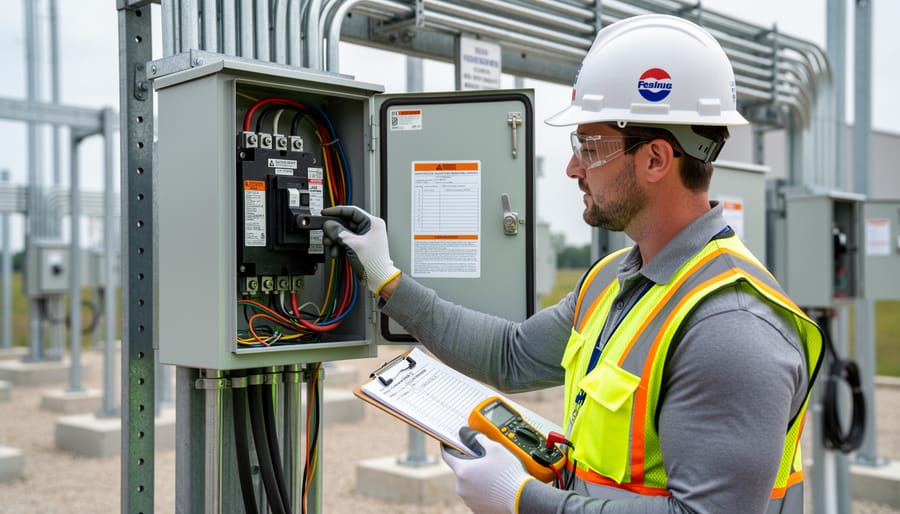
Most solar pool collectors operate as passive solar thermal systems without electrical components, which puts them outside NEC’s electrical code jurisdiction. You can typically install these systems yourself since you’re working with plumbing connections rather than electrical wiring. However, the moment your installation involves powered components, solar controllers, actuated valves, or circulation pumps with electrical connections, you enter NEC territory where professional requirements may apply.
The dividing line centers on electrical work complexity. Plug-and-play systems with factory-wired components that connect to existing GFCI outlets generally remain DIY-friendly. But if you’re running new circuits, installing dedicated breakers, hardwiring pumps, or connecting controllers directly to your electrical panel, most local codes mandate a licensed electrician. This requirement exists because improper electrical work around pools creates serious shock and fire hazards.
Permit requirements vary by location, but most municipalities require permits for new electrical circuits serving pool equipment, regardless of who performs the work. The permit process ensures an inspector verifies your installation meets NEC standards before you energize the system. Some areas also require plumbing permits for solar collector installations that tie into pool circulation systems.
Even when code allows DIY electrical work, consider whether professional installation makes sense. Licensed electricians understand service quality assurance standards specific to pool environments and can navigate permit processes efficiently. They also provide documentation that protects you if insurance questions arise after installation. For purely thermal solar collectors without electrical components, DIY installation remains straightforward, but adding electrical controls shifts the risk-benefit calculation toward professional help.
Meeting Code Requirements with Modern Solar Pool Products
Today’s solar pool heating manufacturers have simplified NEC compliance by engineering their products around code requirements from the ground up. Modern collector panels arrive with UV-rated wiring already installed, eliminating guesswork about wire specifications and reducing installation time. Control systems now include pre-mounted disconnect switches with proper labeling, meeting Article 690 requirements without requiring separate electrical work. Many complete kits bundle all code-compliant components, from properly sized pumps with integrated bonding provisions to conduit fittings rated for outdoor exposure, so homeowners can focus on positioning rather than scrambling for compliant parts.
Premium systems incorporate quick-connect fittings that maintain electrical continuity for bonding while allowing tool-free assembly, a feature particularly valuable for DIY installers working with limited electrical experience. Temperature controllers designed specifically for pool applications come factory-configured to meet overcurrent protection standards, with clearly marked terminals that simplify proper grounding connections. These advances don’t just ease installation, they reduce the risk of code violations that could fail inspection or create safety hazards.
When selecting equipment, verify that manufacturers provide documentation showing NEC compliance and consider how system sizing affects both performance and code adherence. The ability to calculate collector heat output accurately ensures you’re not oversizing electrical components unnecessarily, keeping your installation both efficient and compliant with current standards.
Common NEC Code Questions for Solar Pool Owners
Do I need an electrical permit for a solar pool heating system?
Most jurisdictions require permits for systems with electrical components like pumps and automated controls, even if the collectors themselves are thermal. Simple gravity-fed systems without pumps may be exempt, but check with your local building department before installation.
What happens during a code compliance inspection?
Inspectors verify proper bonding and grounding, check wire sizing and conduit installation, confirm required clearances from the pool, and ensure disconnect switches are accessible and properly labeled. They’ll also review your permit documents and system specifications.
Can I add solar collectors to my existing pool system without a new permit?
Retrofitting solar collectors typically requires a permit because you’re modifying the pool’s plumbing and often its electrical system. The inspection ensures your existing equipment can safely handle the additional load and that new components meet current code.
How do I maintain NEC compliance after installation?
Keep electrical connections tight and corrosion-free, ensure bonding wires remain secure, and replace any damaged conduit or wire insulation promptly. Schedule regular code-compliant maintenance to catch potential issues before they become safety hazards.
These questions reflect the most common concerns homeowners express when planning solar pool installations. Understanding permit requirements upfront prevents delays and potential fines, while knowing what inspectors look for helps you prepare properly. Remember that codes exist primarily for safety, they protect your family, your property, and future owners if you sell your home.