
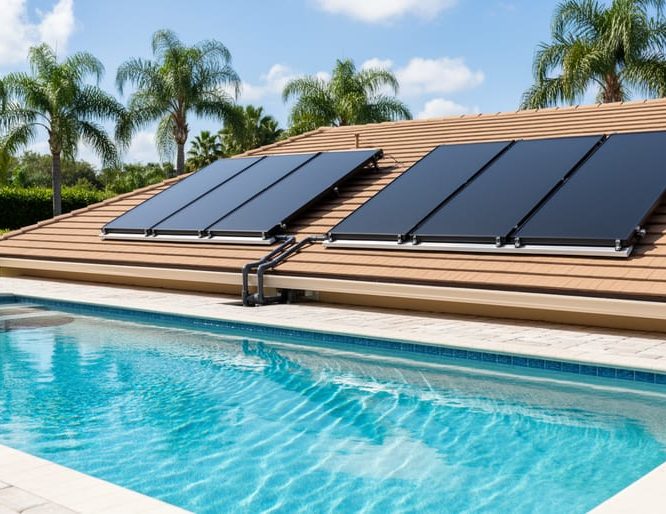
A solar pool heater is the most cost-effective way to extend your swim season in Florida, and the right one depends on your pool size, your budget, and how much roof or ground space you can spare. Florida’s long, bright days give solar collectors plenty to work with. Sunshine is free, so once the system is in place, running costs stay low and your pool stays comfortable well past the point when neighbors are covering theirs for the season.
The payoff is real. A solar heater can add 5 to 12 degrees on a sunny afternoon, which is often the difference between a pool you plan around and one you simply use. It’s also one of the cleanest upgrades you can make, since it warms the water with sunlight instead of gas or electricity.
Options range from a $28.78 Intex 28685E Solar Mat for soft-sided pools to premium panels like the $189.00 GAME SolarPRO Curve and the $279.99 FAFCO Solar Bear 4×20. We’ll walk through how to size a system, compare collector types, and weigh cost against payback, so you can pick with confidence and skip the common mistakes.
Why Florida Is Made for Solar Pool Heating
How the System Works in Simple Terms
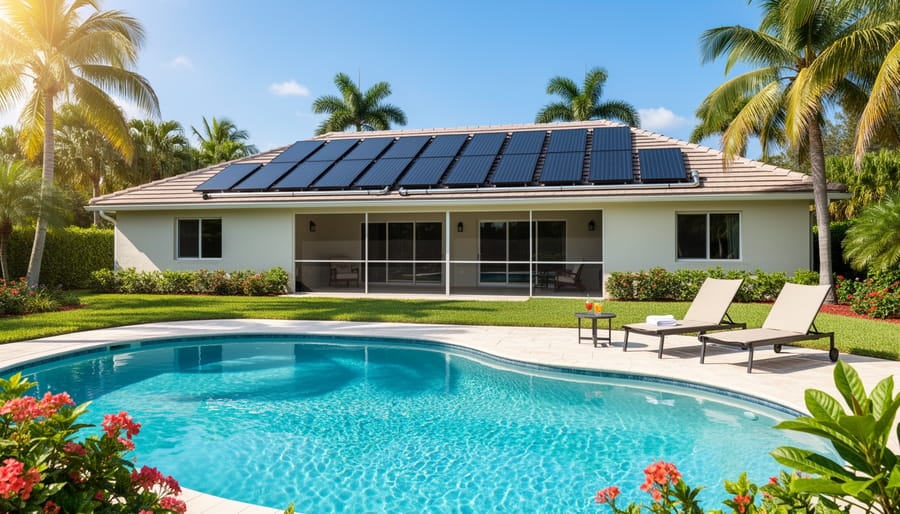
Think of a solar pool heater as a simple loop. Your existing pump pulls water from the pool, sends it through the filter to clean it, and then pushes it up to the solar collectors. A collector is just a panel (often made of tough, UV-stable polypropylene) filled with tiny channels. As the water flows through those channels, the Florida sun warms it.
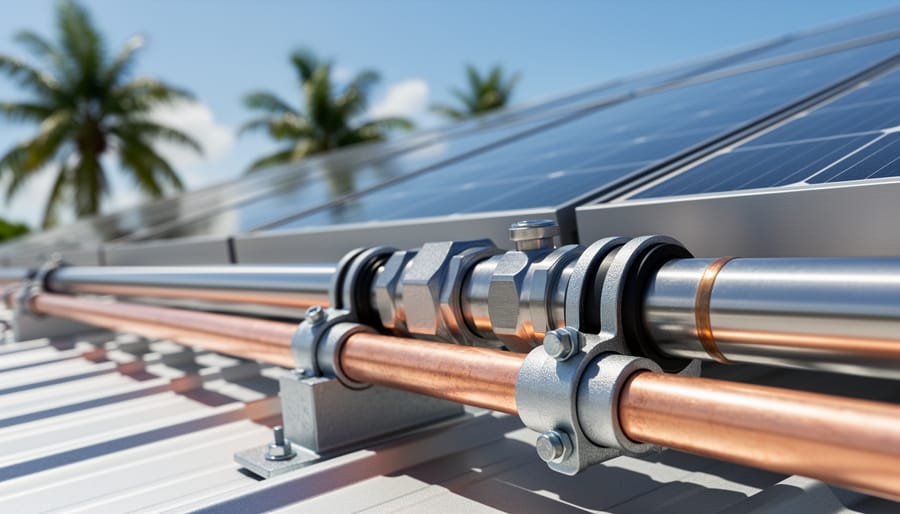
At the top and bottom of each panel sits a manifold, which is a pipe that spreads the water evenly across all those channels and then gathers it back together. Once the water is warmed, it travels through the return line and flows back into the pool, raising the overall temperature a little more with every cycle.
That’s really the whole story, and it’s why upkeep stays so low. There’s no burner and no heating element, only sunshine doing the work. If you’d like a deeper look at how it works we break down each component in more detail.
Most systems also include a simple bypass or flow control, so you can send water to the panels when it’s sunny and skip them when it’s not.
Key Buying Factors: Sizing, Placement, and Pool Type
Durability, Lifespan, and Warranty in Florida’s Sun and Heat
Florida’s sun is the reason solar heating works so well, and it’s also the reason cheap panels give up early. Constant UV exposure, high roof temperatures, and heavy summer storms break down inferior plastics. Look for UV-stable materials that won’t turn brittle, warp, or crack after a few seasons of full sun. If a panel feels thin or flimsy in your hands, it probably won’t hold up on a Florida roof.
Our research found that the cheapest panels often fail within five to seven years. Industrial-grade panels like Heliocol routinely last two decades or more. That gap matters for your budget. A low-priced panel you replace twice costs more than a sturdier one you install once, and replacement means paying for labor again too.
A warranty is one of the clearest signals of build quality. A manufacturer willing to stand behind its panels for a long stretch is telling you something about the materials inside. Read what the warranty actually covers, such as defects, UV damage, and freeze or heat failure, and check whether labor is included. A short or vague warranty is a red flag.
Durability also protects your results. A degraded collector transfers heat poorly, so you lose performance long before the panel fully fails. When you compare options, take the time to calculate heat output for the panels you’re considering, then weigh that against expected lifespan. The best long-term value is rarely the lowest sticker price. It’s the panel that keeps delivering free, renewable heat for years.
Solar Pool Heater Types Compared: Mats, Domes, Coils, and Glazed Panels
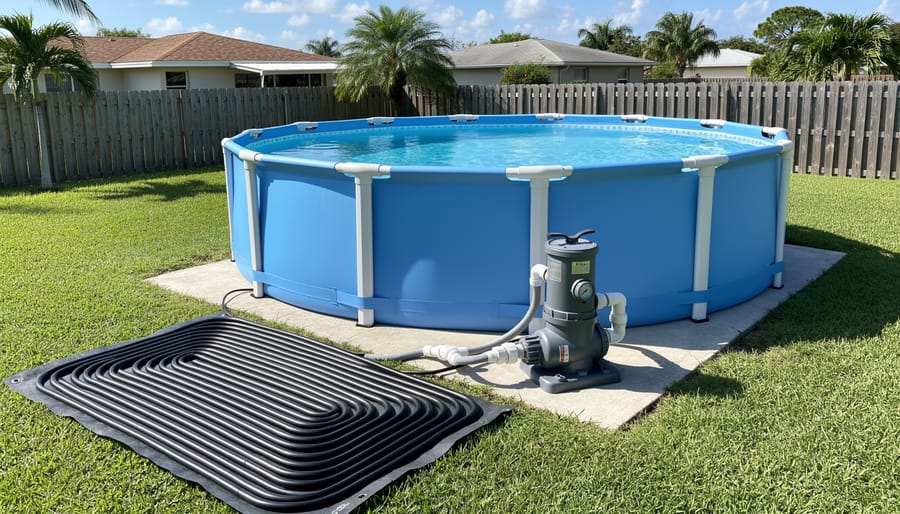
Florida buyers will run into four main solar heater designs, and each fits a different pool and budget. The good news is that none of them is hard to set up. Most connect to your existing pump and return line with basic fittings, so a weekend is often enough.
Mats are the lightest and cheapest option. They’re built for above-ground and soft-sided pools, and a product like the Intex 28685E Solar Mat (listed at $28.78) shows how low the entry price can be. You lay them in the sun and hook up hoses. The tradeoff is that they’re less rugged and deliver more modest heat than permanent systems.
Coil and dome designs use tubing arranged to catch a lot of sun in a compact footprint. The SunCOIL Dome, listed at $99.99, is an example of a budget-friendly pick in this style. They’re easy to place on a patio, deck, or lawn, which suits renters and anyone who doesn’t want to touch the roof.
Unglazed polypropylene panels are the workhorse for in-ground pools. Kits like the Doheny’s 2.5’×20′ Kit ($269.99) and the FAFCO Solar Bear 4×20 ($279.99) fall in this family. They’re UV-stable and built to handle Florida’s heat, and they work well for permanent roof or ground installs.
Glazed panels put a glass cover over the collector to hold in warmth. They shine in cooler weather, but in Florida’s mild climate the extra cost rarely pays off for pool heating.
| Type | Best For | Installation Ease | Key Consideration |
|---|---|---|---|
| Mats | Above-ground and soft-sided pools | Very easy | Lowest cost, modest durability |
| Coils and domes | Small pools, no-roof setups | Easy | Flexible placement, compact |
| Unglazed polypropylene | In-ground pools, permanent installs | Moderate | Strong heat output and longevity |
| Glazed panels | Cooler climates, year-round use | Moderate | Higher cost, less needed in Florida |
For most Florida homeowners, the real decision comes down to above-ground versus in-ground. Match the heater type to your pool, confirm your sizing, and you’ll have a simple, eco-friendly way to stretch the swim season.
Top Solar Pool Heater Picks for 2026
Which Pick Fits Your Pool and Budget
If you’re on a tight budget with an above-ground pool, the Intex 28685E Solar Mat is the easy entry point at $28.78, and the SunCOIL Dome at $99.99 steps up to a more capable option without a big spend. Both suit the soft-sided Intex and Bestway pools many Florida families use, and both go together in an afternoon.
If maximum heat output is your priority, look at the FAFCO Solar Bear 4×20 at $279.99 or the Doheny’s 2.5’×20′ Kit at $269.99. More collector area on a sunny roof or ground rack means more warmth, especially when you want to stretch swimming well into the cooler months. The GAME SolarPRO Curve at $189.00 is a good middle path if you want a premium build without the top-tier price.
It helps to keep the type of pool in mind. Above-ground kits are designed to be simple and affordable, and they’re a fine fit for seasonal or smaller pools. A permanent in-ground system is a different commitment: more collector area, plumbing tied into your equipment pad, and panels meant to stay put for years.
That’s where durability enters the picture. If you plan to heat the same pool for a decade or two, Heliocol-class panels show what the long-lifespan end of the market looks like, with 20+ year service lives in Florida’s strong sun. Paying more up front for panels like these usually beats replacing cheaper ones early, and it keeps your eco-friendly heating running for the long haul.
Installation Made Easy: DIY or Professional Install
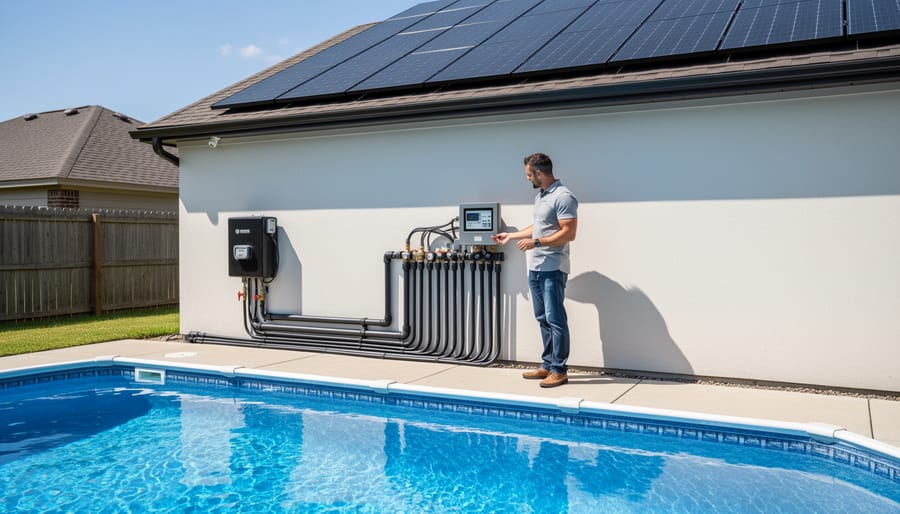
Installing a solar pool heater is more approachable than most people expect. The system simply tees into your existing pool plumbing, so there’s no new electrical system to design and no complicated controls to learn. Most homeowners with basic tools and a free weekend can handle a ground-mounted setup, and that’s a big part of what makes solar so cost-effective compared with gas or electric heaters.
Here’s the general flow at a high level. First, pick a sunny spot, ideally an unshaded roof section or ground area that gets strong sun through the middle of the day. Next, connect the plumbing so pool water flows from your filter to the collectors and back through the return line. Then add a flow control or bypass as needed, which lets you send water through the panels when it’s sunny and around them when it isn’t. Finally, prime the system, run the pump, and check every joint for leaks before you call it done.
A good plumbing diagram takes the guesswork out of those connections. Components like manifolds, which distribute water evenly across your panels, and pressure monitoring gauges also simplify setup by making it easy to confirm that flow is right from day one.
Hiring a pro makes sense when the job gets more complicated: roof mounting at height, tricky plumbing runs, or any electrical work tied to automated controls. A pro also makes it easier to stay on the right side of the Florida solar code. For simpler ground-mount or above-ground setups, though, DIY is a realistic and rewarding option.
Costs, Payback, and Long-Term Savings
The smartest way to judge a solar pool heater is by what it costs over its whole life, not just the sticker price. The verified 2026 picks give you a realistic range to work with. At the low end, the Intex 28685E Solar Mat runs $28.78, while the SunCOIL Dome comes in at $99.99. Moving up, the GAME SolarPRO Curve is $189.00, Doheny’s 2.5’×20′ Kit is $269.99, and the FAFCO Solar Bear 4×20 is $279.99. Those are the above-ground and kit-style options, and permanent in-ground systems are a different category, so ask for a quote based on your pool.
Operating cost is where solar really shines. Once the panels are installed, the sun does the heating. Your existing pump circulates the water, so you aren’t paying for gas or running a power-hungry electric heater just to take the chill off. In a state with this much sunshine, that’s a big reason owners find solar so appealing.
Durability matters just as much as price. The cheapest panels often fail within five to seven years, which means buying twice. Industrial-grade panels like Heliocol routinely last two decades or more. Spreading a higher upfront cost across many more swim seasons can make the sturdier option the better value.
Think of payback this way: every season a panel keeps working, your heating costs stay low. Your actual timeline depends on your pool size, how much you swim, and the system you choose, so run the numbers for your own setup before deciding.
Mistakes to Avoid When Buying a Solar Pool Heater
Even the best solar pool heater can disappoint if the buying decision goes sideways. The good news is that most problems are easy to avoid once you know what to watch for. Whether a system works or sits comes down to a handful of choices made before the first panel goes up.
Here are the pitfalls we see most often among Florida buyers, each with a simple fix:
- Undersizing the collector area: Confirm sizing against your pool’s surface area and volume before you buy, and add capacity if you want a longer swim season.
- Installing in a shaded spot: Pick the sunniest roof or ground location, and check it at different times of day, since palm fronds and nearby rooflines shift shade through the seasons.
- Choosing the cheapest panel: Budget panels often fail within five to seven years in Florida’s UV, so favor UV-stable materials and a strong warranty.
- Ignoring pool-type compatibility: Match the heater to your pool, especially if you have a soft-sided Intex or Bestway.
- Skipping a bypass or controls: Add a bypass so you can isolate the panels and control flow when you don’t need heat.
- Forgetting maintenance: Plan for occasional inspections of connections and panels so small leaks never become big ones.
None of these fixes are expensive or complicated, and most are decided at the planning stage. Spending a little extra time on sizing, placement, and build quality now protects your investment and keeps your system producing free, renewable heat for years. If you’re unsure on any point, a quick consult with an installer can confirm your plan before you commit.
Solar Pool Heater FAQs for Florida Homeowners
Most Florida pool owners ask the same handful of questions before they buy. Here are straight answers to the ones that come up most often.
How much warmer will a solar heater make my pool?
In side-by-side testing, a solar heater added 5 to 12 degrees on a sunny afternoon. Your results depend on collector size, sun exposure, and how long the pump runs during peak daylight.
Can I use a solar pool heater year-round in Florida?
Florida’s sunshine makes solar heating useful across much of the year, and it’s especially good for extending spring and fall swimming. Output drops on cloudy days and during winter cold snaps, so expect a warmer pool rather than a constant temperature.
Do I need a permit to install one?
It depends on your city or county, and on whether you’re mounting panels on a roof or adding plumbing. Call your local building department before you start, particularly for a permanent installation.
How long do solar pool heater panels last?
Budget panels often fail within five to seven years in Florida’s heat and UV, while industrial-grade panels like Heliocol routinely last two decades or more. A strong warranty is a good sign of build quality.
Can I install it myself?
Yes, many homeowners handle setup themselves, especially with above-ground kits and mats. Roof mounting or more complex plumbing is where hiring a professional makes sense.
Will it work on an above-ground pool?
Absolutely. Several of the top 2026 picks, including the Intex 28685E Solar Mat, are built for above-ground pools and are compatible with soft-sided Intex and Bestway models.
If your question isn’t covered here, the sizing and placement guidance earlier in this guide is the best place to start.
Florida’s sunshine is free, and a solar pool heater turns it into warmer water without a gas bill or a big electric draw. That’s the heart of the case: a clean, renewable way to stretch your swim season, with low running costs once the system is in place.
As you weigh your options, keep four decisions front and center. Size the collector area to your pool. Pick a sunny, unshaded spot for placement. Choose durable, UV-stable panels so you’re not replacing them early. And plan your installation, whether you tackle it yourself or bring in a pro for roof mounting or tricky plumbing.
Get those right, and your pool stays comfortable well into spring and fall. When you’re ready to move forward, explore the solar pool heating systems from EJ Solar Pools. Whether you’re a weekend DIYer or a professional installer, you’ll find solutions built to make the job straightforward and the savings last.